

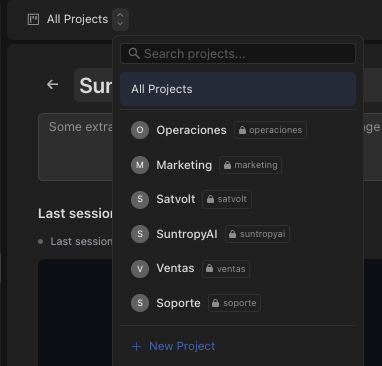
Everything else a project gives you — cost per project, threads filtered per project, a tidier interface — follows from the same grouping. But if you only take one thing from this page: a project is the boundary between one user and another user’s work.
Why they exist
Visibility
The reason projects exist. Access is granted per project and per user, and a user reaches exactly the entities of the projects they were given.
Cost
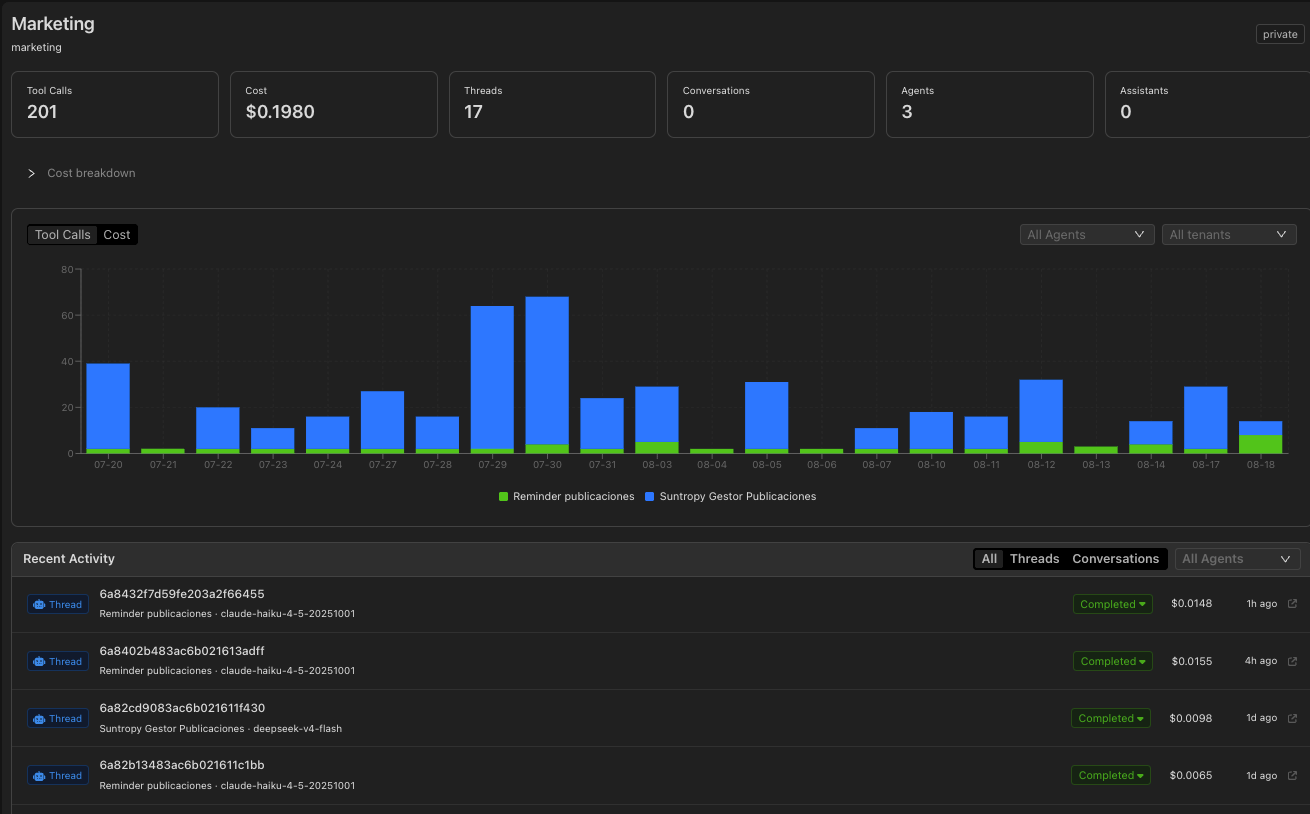
Every run is attributed to a project, so “what does the support automation cost us” is a question with an answer.
Focus
Choosing a project filters the interface to it. Fewer things on screen, and no chance of editing the wrong agent.
Traceability
Threads and conversations are listed per project, whichever agent produced them.
Who sees a project
A project is either public — visible to everyone in the account — or private, visible only to those explicitly given access. Administrators see everything either way.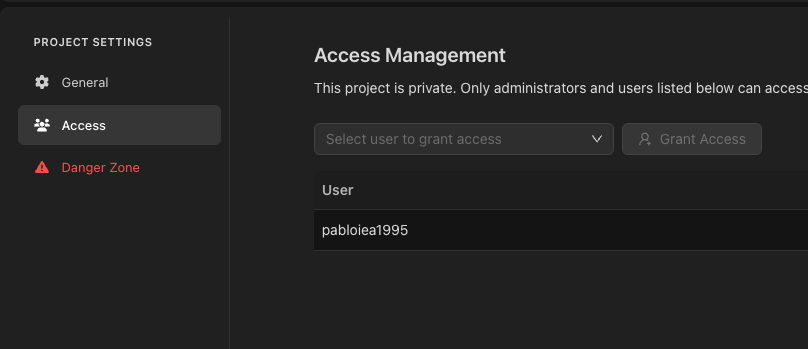
That second shape is what makes a project usable as a shared space rather than an all-or-nothing wall: a contractor can be given the two assistants they work on inside a project that also holds twenty they must not see.
The role decides what someone can do once inside; the project decides what they can reach. See Users and roles for the three roles and how the two combine.
What a project tells you
Entities without a project
An agent can also live outside any project — “All Projects” — which makes it visible account-wide. It is the right choice for something genuinely shared, and the wrong one for anything that should be confined.Project-less entities are treated differently depending on where you are looking. In the console, which always has a project selected, they show up in every project. Through the public API they are excluded from a non-administrator’s listing, so a scoped token cannot pull the whole account by listing without a filter.