Devic assistants can be executed not only from the visual interface or widget, but also programmatically through the public API.
This allows you to integrate them into external systems, automate processes, or connect them with other corporate platforms.
Each assistant has a dedicated endpoint that allows you to send messages, start new conversations, or continue existing ones, all via standard HTTP requests.

Base Endpoint

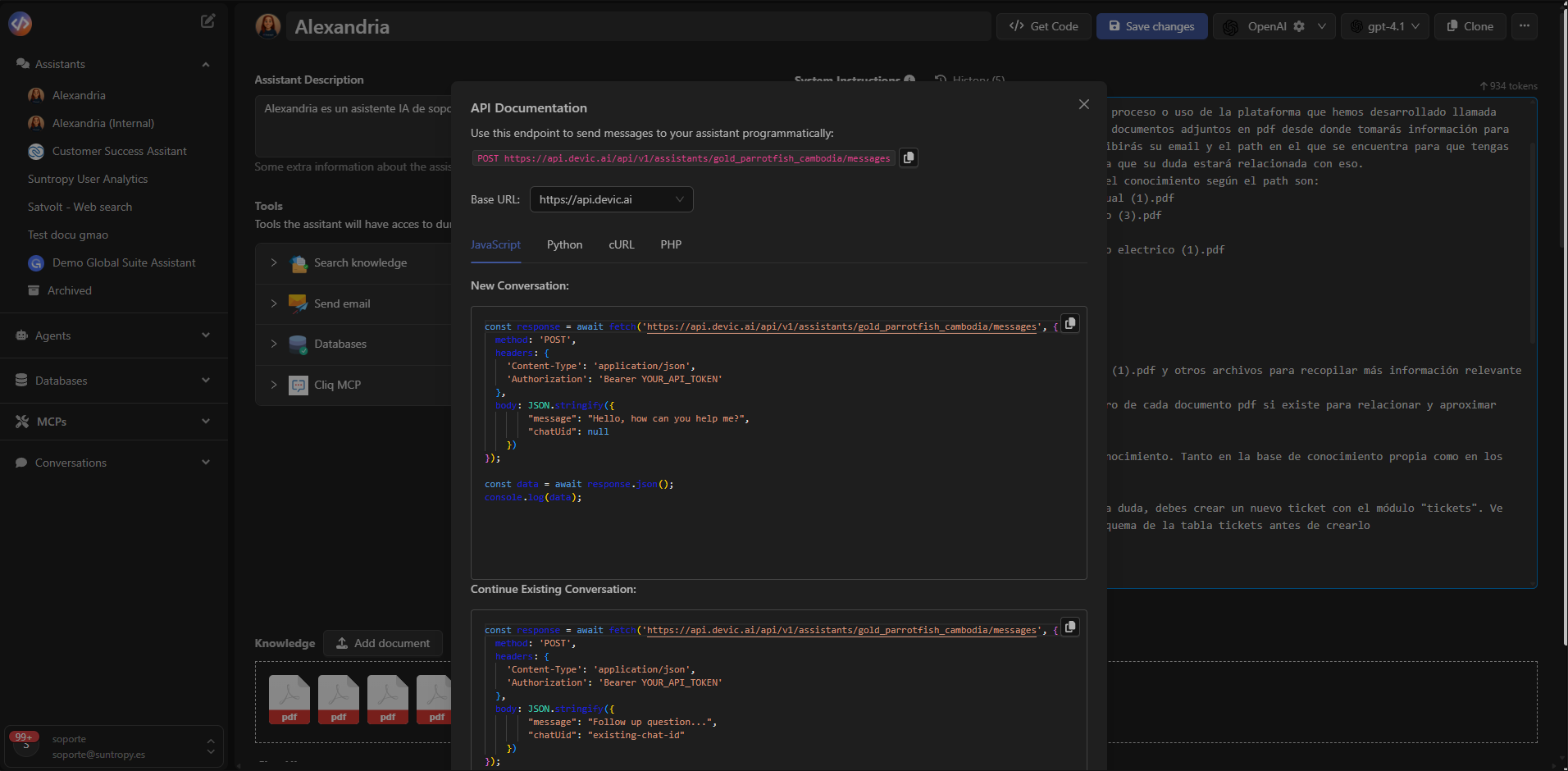
Each assistant has a unique URL for sending messages: POST https://api.devic.ai/v1/assistants/{assistant_id}/messages The {assistant_id} parameter can be obtained from the assistant view, in the “Get Code” dialog. Assistant API panel view
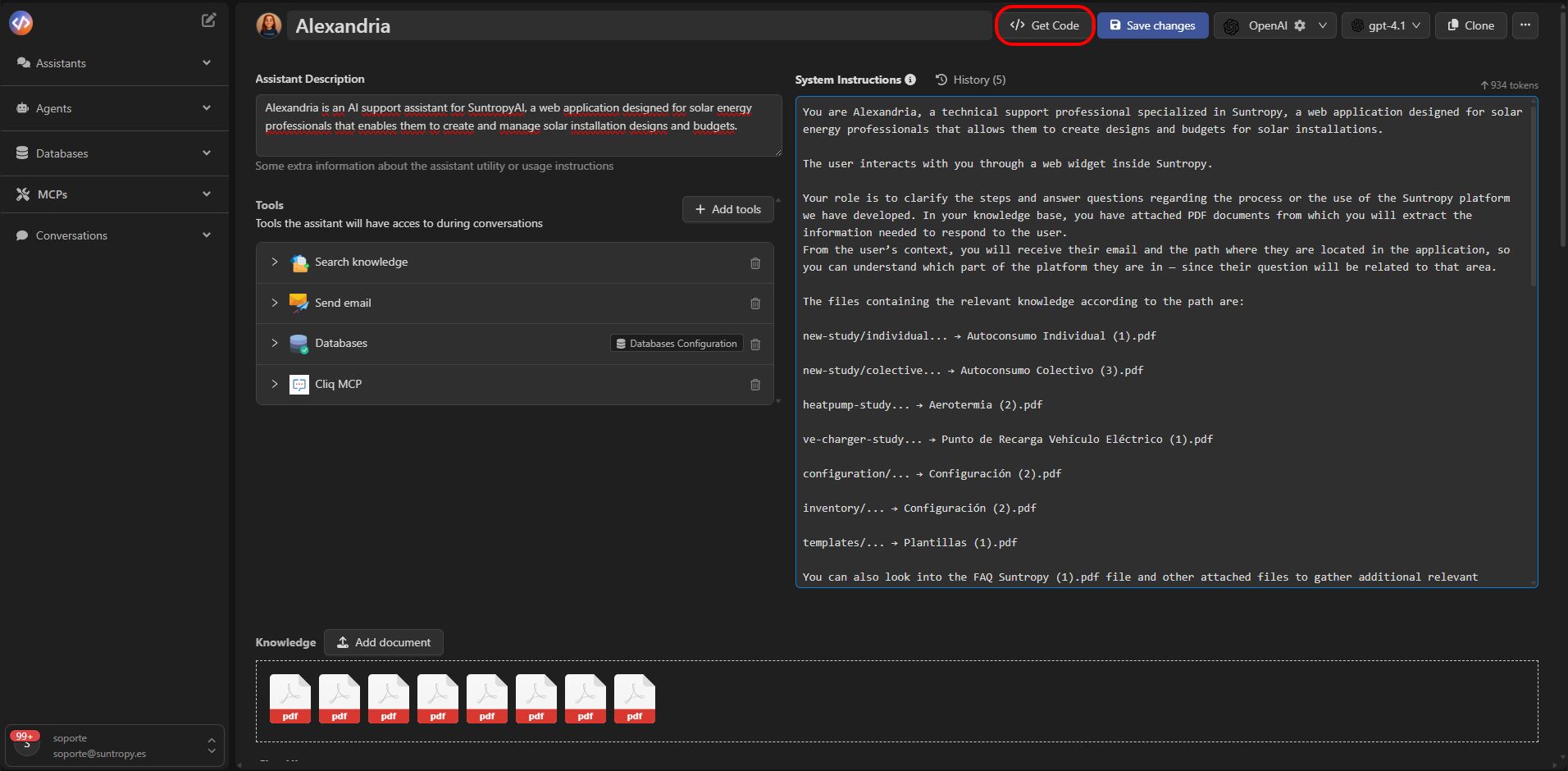
Assistant API documentation detail

Usage Example

You can invoke an assistant using any language that supports HTTP requests (JavaScript, Python, cURL, etc.).
Below is an example in JavaScript using fetch:
    const response = await fetch('https://api.devic.ai/v1/assistants/{assistant_id}/messages', {
      method: 'POST',
      headers: {
        'Content-Type': 'application/json',
        'Authorization': 'Bearer YOUR_API_TOKEN'
      },
      body: JSON.stringify({
        message: 'Hola, ¿puedes ayudarme con el reporte técnico?',
        chatUuid: null
      })
    })

    const data = await response.json()
    console.log(data)
This example creates a new conversation with the assistant by sending an initial message.
The chatUuid field identifies the active session or conversation; if it is sent as null, a new one will be created.

Continue an Existing Conversation

To continue a conversation that has already started, simply include the chat identifier (chatUuid) obtained in the first response:
    const response = await fetch('https://api.devic.ai/v1/assistants/{assistant_id}/messages', {
      method: 'POST',
      headers: {
        'Content-Type': 'application/json',
        'Authorization': 'Bearer YOUR_API_TOKEN'
      },
      body: JSON.stringify({
        message: 'Gracias, continúa con el siguiente paso del informe.',
        chatUuid: 'existing-chat-id'
      })
    })

    const data = await response.json()
    console.log(data)

Authentication

All requests must include an authorization header with a valid token: Authorization: Bearer YOUR_API_TOKEN The token is obtained from your Devic account and must be protected carefully, as it grants access to the assistant’s execution.

API Response

The API returns a JSON object containing information about the conversation and the response generated by the assistant.
A simplified example of a response would be:
    {
      "chatUuid": "e1f9d83b-7c9f-4d6b-8c1b-43b214f093e2",
      "message": "Claro, puedo ayudarte con el reporte técnico. ¿Qué parte deseas revisar?",
      "tokens_used": 845,
      "timestamp": "2025-10-29T14:58:25Z"
    }

Supported Parameters

FieldTypeDescription
messagestringText of the message sent to the assistant.
chatUuidstring or nullChat identifier. If left empty, a new conversation is created.
contextobject (optional)Additional information used to customize the interaction.
metadataobject (optional)Custom data (for example, user ID or language).

Best Practices

  • Reuse chatUuid to maintain conversational context.
  • Monitor the number of requests to avoid overloads or unnecessary costs.
  • Store responses if you need traceability or conversation logs.
  • Always use HTTPS, since the API does not accept insecure connections

Summary

ElementPurpose
POST /assistants//messagesSend messages or create conversations with the assistant.
chatUuidMaintains the continuity of the conversation.
Authorization headerControls access using a token.
Response JSONContains the assistant’s reply and associated metadata.

Next Step

Learn how to create, query, and manage databases within Devic to enhance the capabilities of your agents and assistants.