

It defines its behavior, the objectives it must achieve, and the rules under which it must operate.
In other words, the prompt translates user intent into executable instructions for the model.
What the Prompt Is
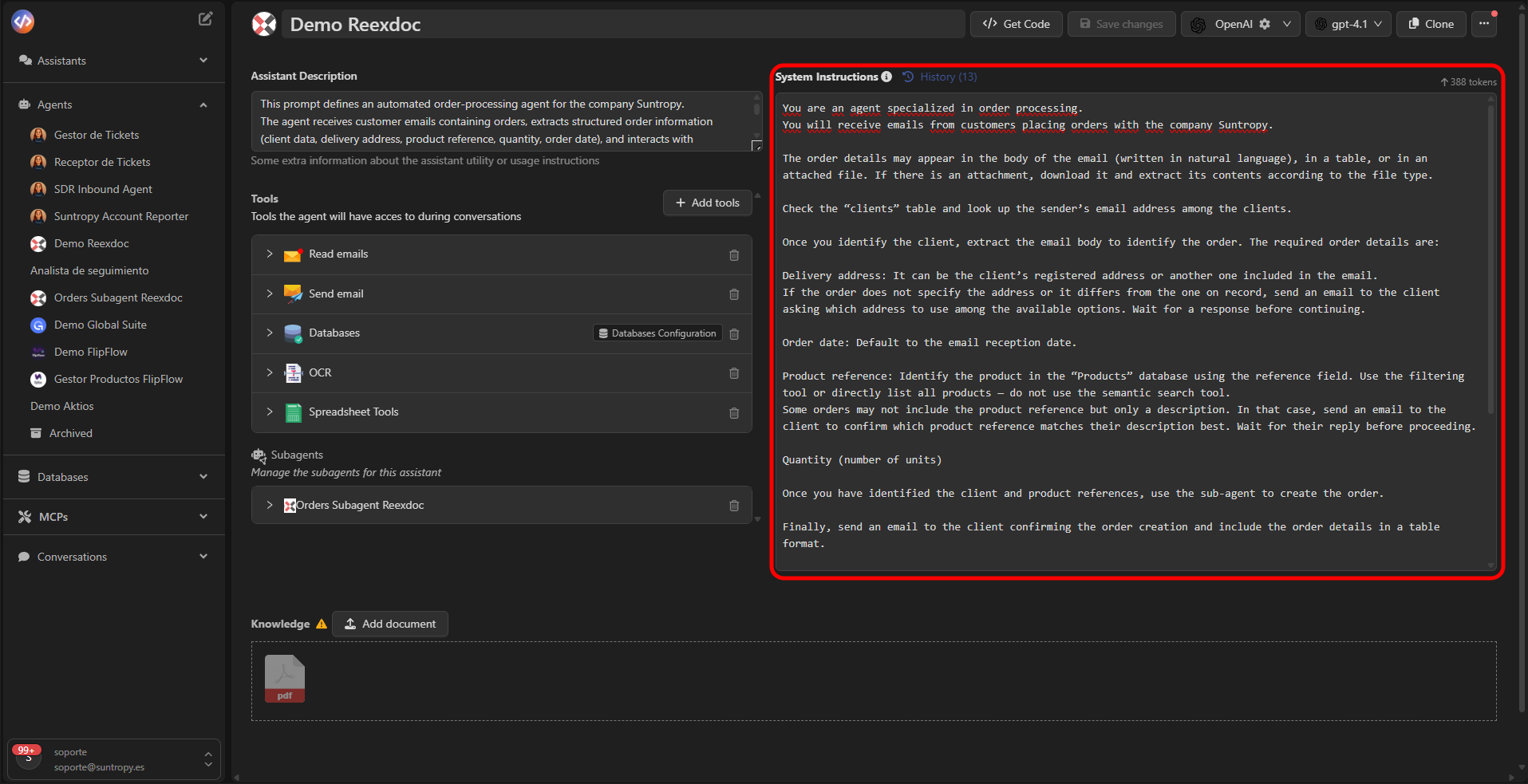
The prompt contains the instructions that the language model (LLM) follows to perform a task.It defines how the agent should reason, what steps it must follow, and when a task should be considered successfully completed. Unlike a simple descriptive text, the prompt in Devic acts as the agent’s cognitive system, combining context, rules, and goals to guide its decisions. Example You are an agent specialized in processing orders.
You will receive emails from customers with purchase requests addressed to
{{nombre_empresa}}.Consult the customer table and search for the sender’s email among the records.
Once the customer is identified, extract the order details:
- Delivery address
- Order date
- Product references
- Number of units
How to Structure a Good Prompt
A well-designed prompt significantly improves the agent’s accuracy and autonomy.Below is a recommended structure for defining it clearly and effectively:
Recommendation: use short, direct, unambiguous sentences.
Agents perform better with explicit instructions and clear logical structure.
Dynamic Variables
Prompts in Devic can include dynamic placeholders, such as{{nombre_empresa}} or {{usuario}}, which are automatically replaced during the agent’s execution.This allows prompts to be reusable and adaptable to different contexts or environments.
History and Versioning
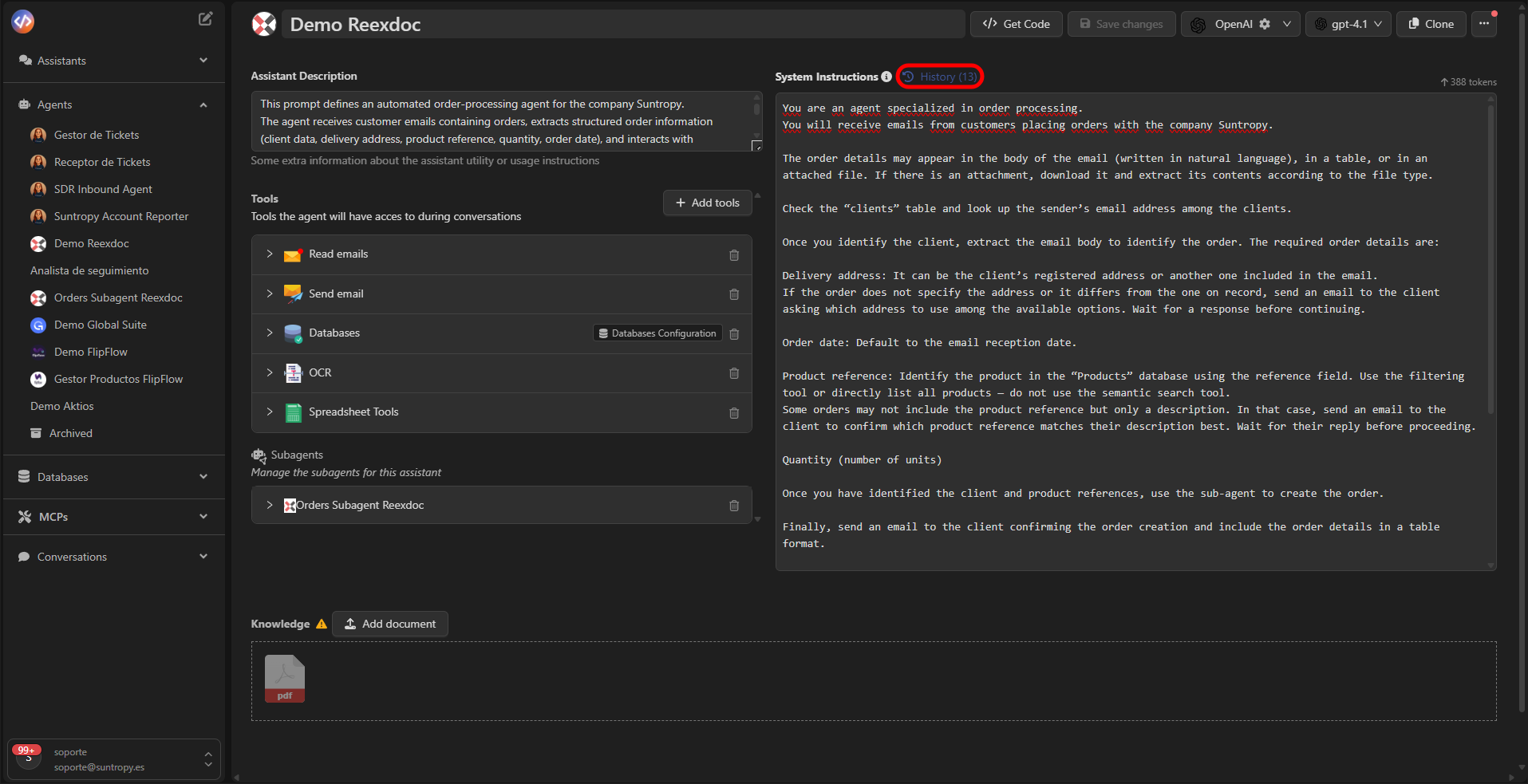
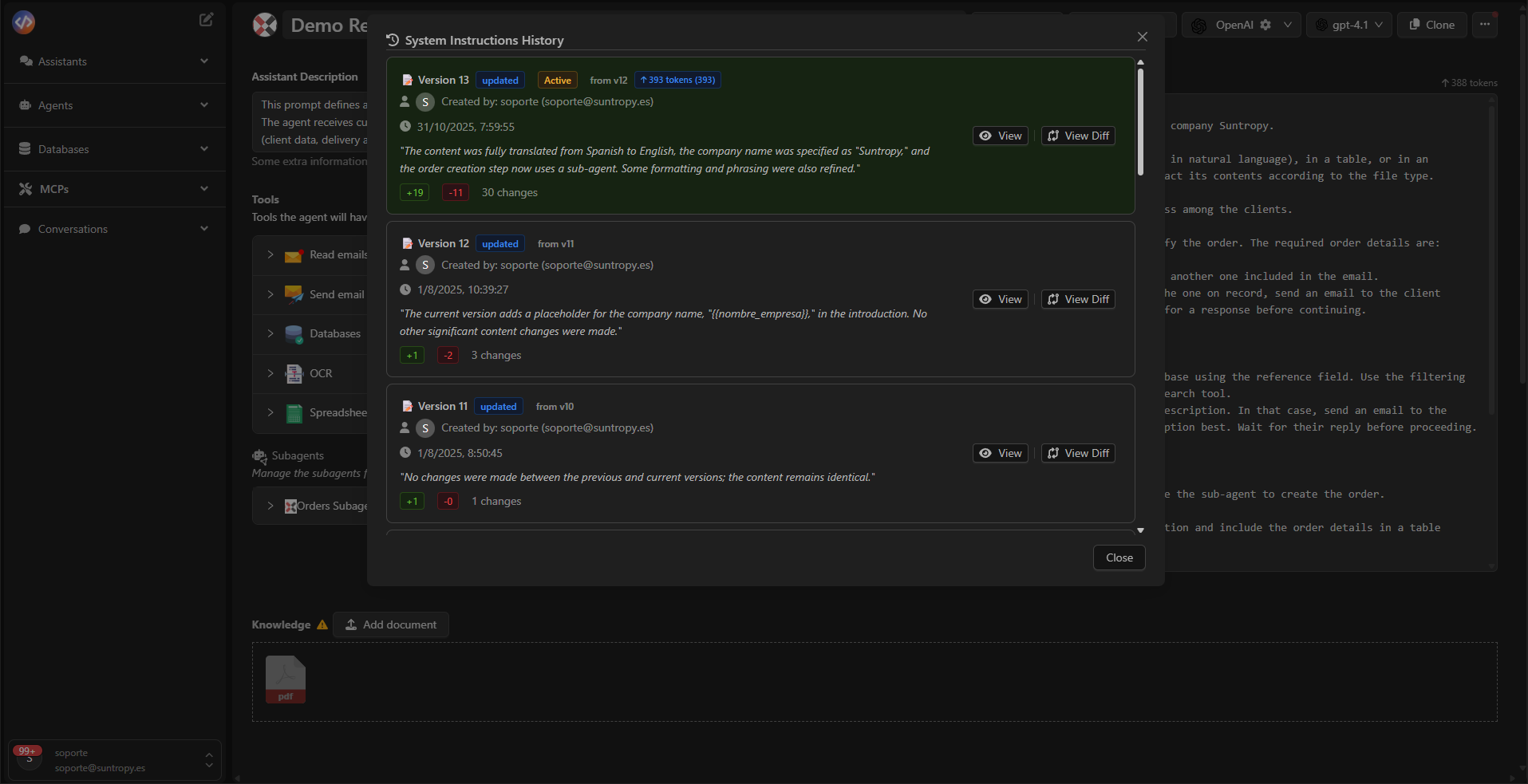
Each modification of the prompt is automatically saved as a new version.Devic keeps a complete record of all created versions, allowing you to review, compare, or restore any previous version at any time. The history can be opened from the top of the editor via the History option.
Version Comparison
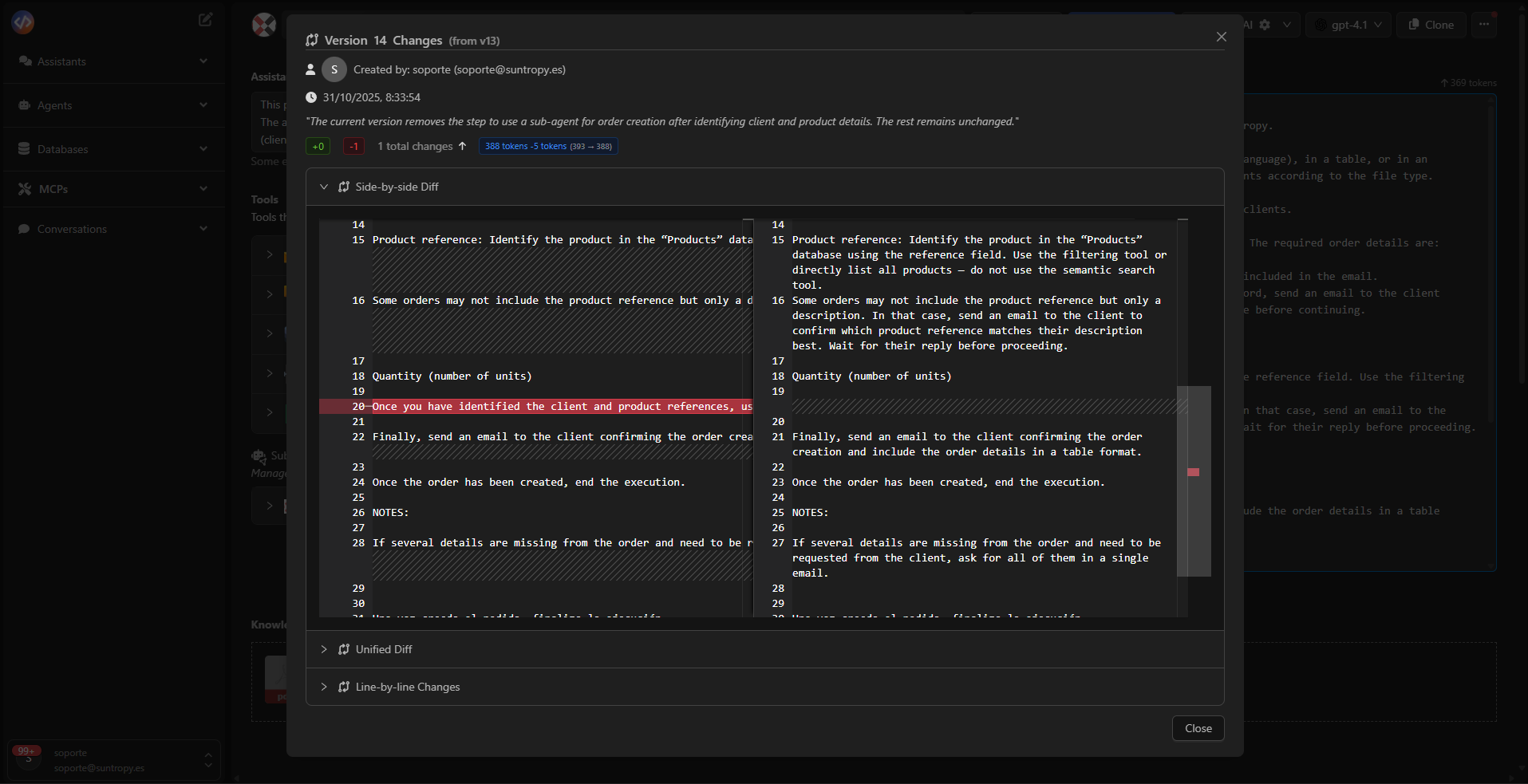
The Diff view allows you to compare two prompt versions in detail, line by line.Differences are displayed as follows:
- Green: added text
- Red: removed text
- No color: unchanged text
Best Practices
- Keep the agent’s role clear and consistent.
- Use lists or numbered steps to structure actions.
- Include dynamic variables when needed.
- Avoid ambiguous or contradictory instructions.
- Make incremental changes rather than rewriting the entire prompt.
- Document relevant assumptions or exceptions directly in the prompt.
When to Update the Prompt
You should create a new prompt version when any of the following occurs:- The agent’s goal or scope changes.
- Tools are added or removed.
- The structure of data sources changes.
- You identify interpretation errors in execution.
- You aim for greater accuracy or better contextual responses.
Next Steps
Tools
Learn about the tools your agents can use to execute actions, query data, or interact with MCPs.
RAG
Learn how to integrate knowledge bases and semantic search to enrich your agents’ decisions and responses.
Continuous Optimization
Improve your agents’ performance through automatic evaluation, human feedback, and iterative prompt/tool adjustments.
Other Options
Explore advanced configurations such as subagents, scheduled executions, or contextual control parameters.