

Environment
Connecting an agent to an environment gives it that environment’s tools, knowledge, variables and sandbox — all at once, and shared with everything else connected to it.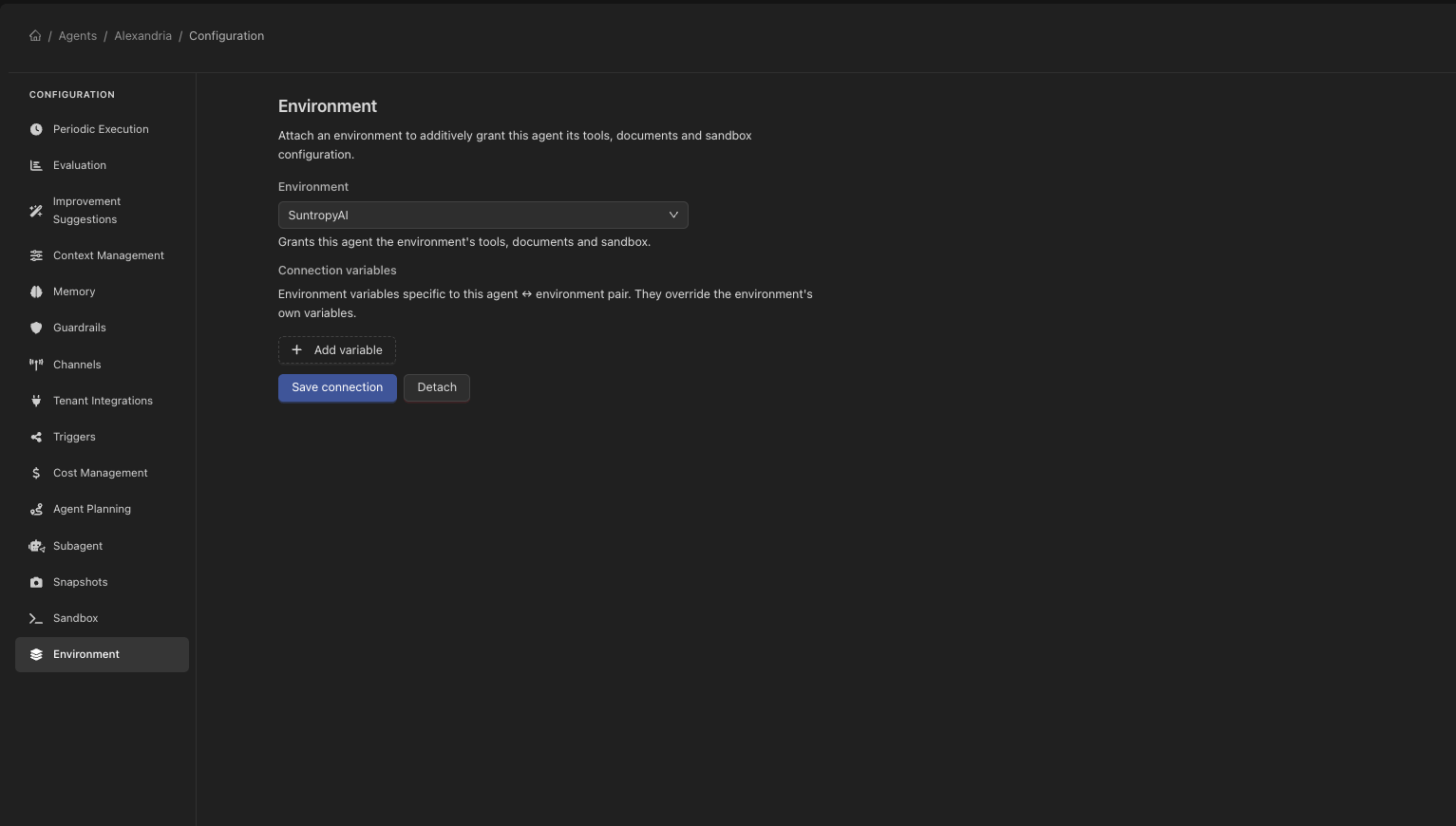
Preprovisioning the sandbox
By default the sandbox is created the first time the agent asks for it, inside its own turn — so the model waits for a machine to be created, restored and initialised. Preprovisioning starts that work in the background as soon as a run begins, so the machine is ready by the time it is needed. Worth turning on for any agent that reliably uses the terminal.Memory
An agent with memory enabled carries facts across runs, in the bucket its scope resolves to.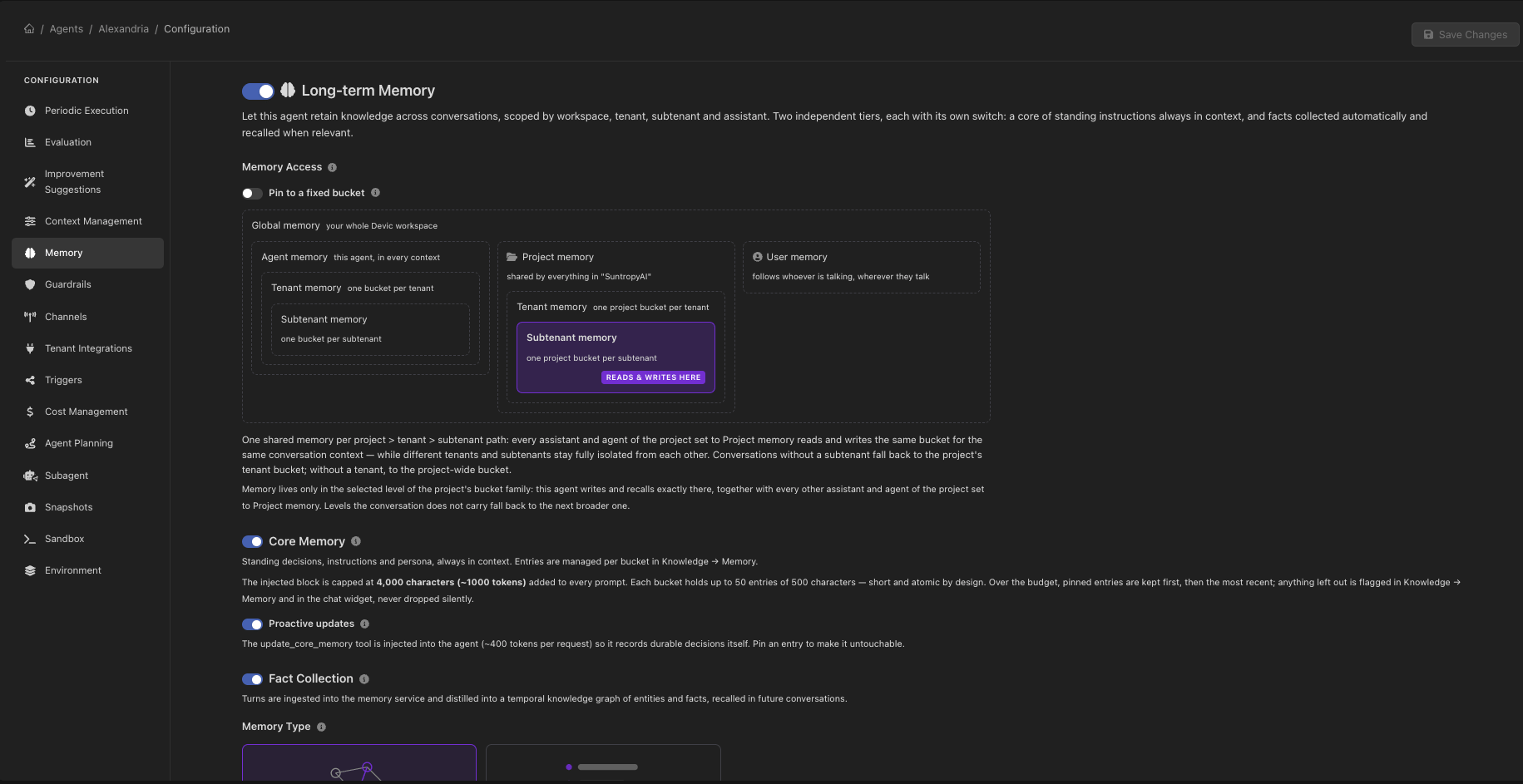
owner. An agent that runs on a schedule with nobody behind it falls back to its own bucket; an agent working on behalf of a person, on the same account, can share that person’s memory with every other entity set to owner: user. See Buckets and scope.
Subagents
An agent can be made callable by another agent, as if it were a tool.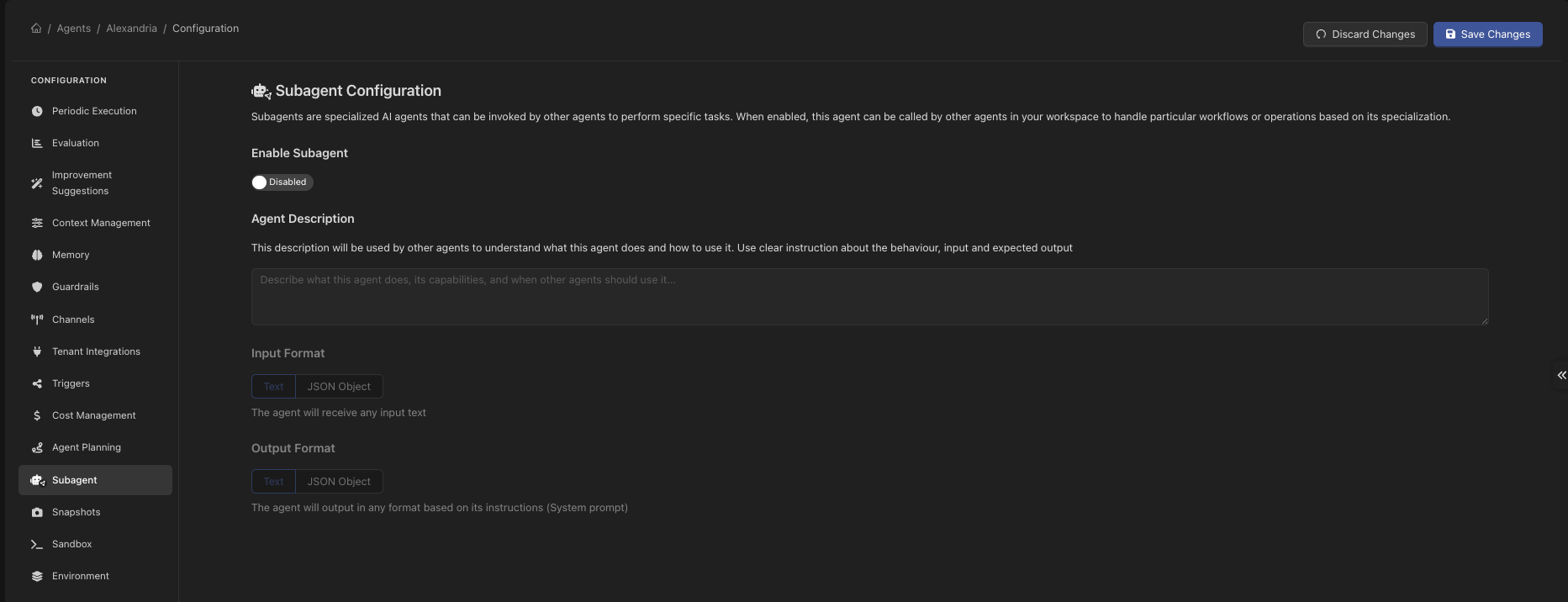
The description is the interface
A subagent carries a description written for other agents: what it does, what it expects and what it gives back. That text is what a calling agent reads when deciding whether to delegate, so it is the difference between a specialist that gets used correctly and one that gets used at the wrong moment or not at all.Contracts
A subagent also declares what it takes and what it returns:Configuration snapshots
A snapshot saves an agent’s or assistant’s whole configuration — prompt, model, tools, everything — under a name you give it.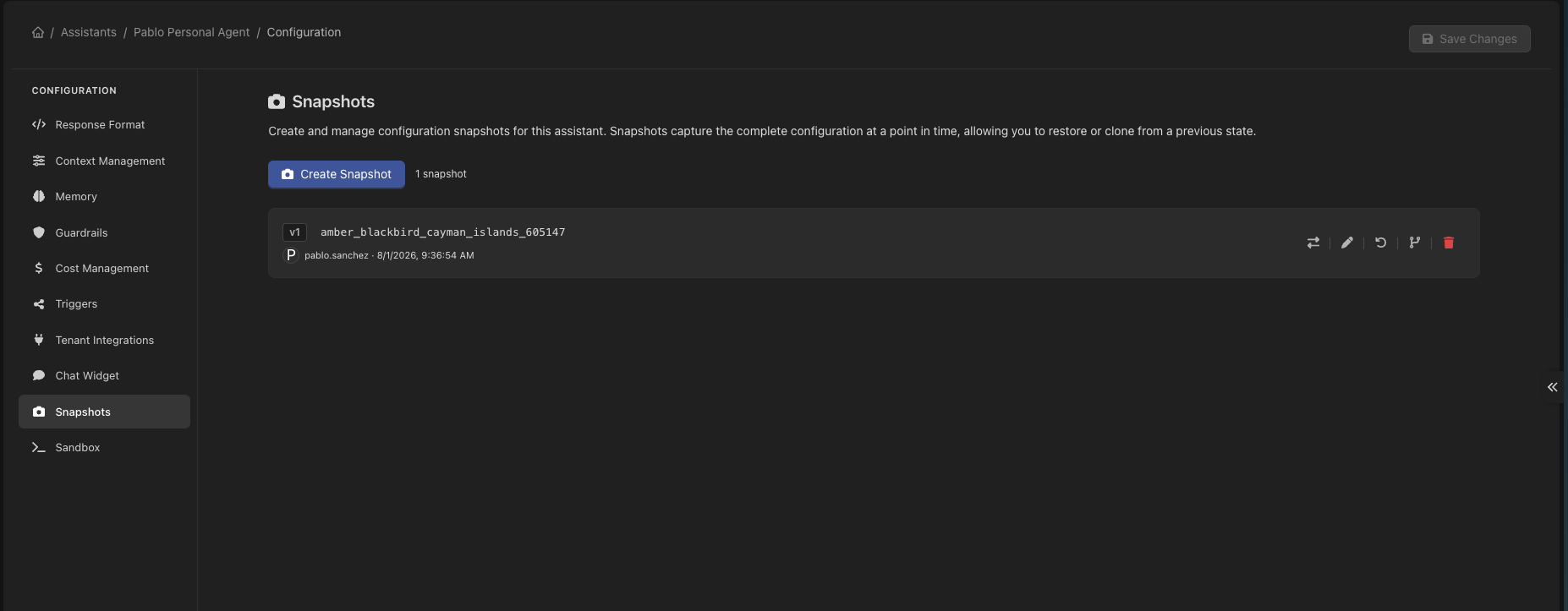
Related
Environments
What an environment carries, and how connecting works.
Memory
What is remembered, and for whom.
Triggers
Starting an agent from an event instead of a person.
Human in the loop
Pausing a run for approval.