Configuring it
Snapshots: giving the machine a memory
By default, a sandbox is thrown away when the session ends. Enable snapshots and the filesystem is saved instead, so the next session starts where the last one left off — dependencies already installed, working directory intact. The snapshot lives on the environment, not on any single agent. That is what makes a team of agents work on the same material: they share one machine state.Fixed snapshot (default)
Sessions always start from the same saved state, and cannot write back to it. Anything a run does is discarded when it ends.
Evolving snapshot
Turned on explicitly. The snapshot is replaced when a session closes, so the machine keeps everything each session did.
Provisioning a fixed machine
Freezing the snapshot raises an obvious question — how does anything get into it in the first place? Two ways:- Re-initialize the snapshot, which runs the init script and the configured CLIs on a fresh machine and saves the result. Use it once the provisioning is written down.
- Open a terminal, work, and save on close. A manual session may write to a fixed snapshot; that is the exception the mode makes, and the reason the terminal asks before closing. Use it while you are still working out what the provisioning should be.
One snapshot per tenant
For multi-tenant products, snapshots can be split per tenant: each customer’s first session starts from the shared base snapshot and, from then on, keeps its own. Sessions with no tenant keep using the shared one. It is opt-in, and it is the setting that lets one environment serve many customers without their files ever meeting.A sandbox snapshot is a copy of the machine, and it is configured here, on the environment. It has nothing to do with the Snapshots section of an agent or assistant, which versions that entity’s configuration — see Configuration snapshots.
Keeping a sandbox alive
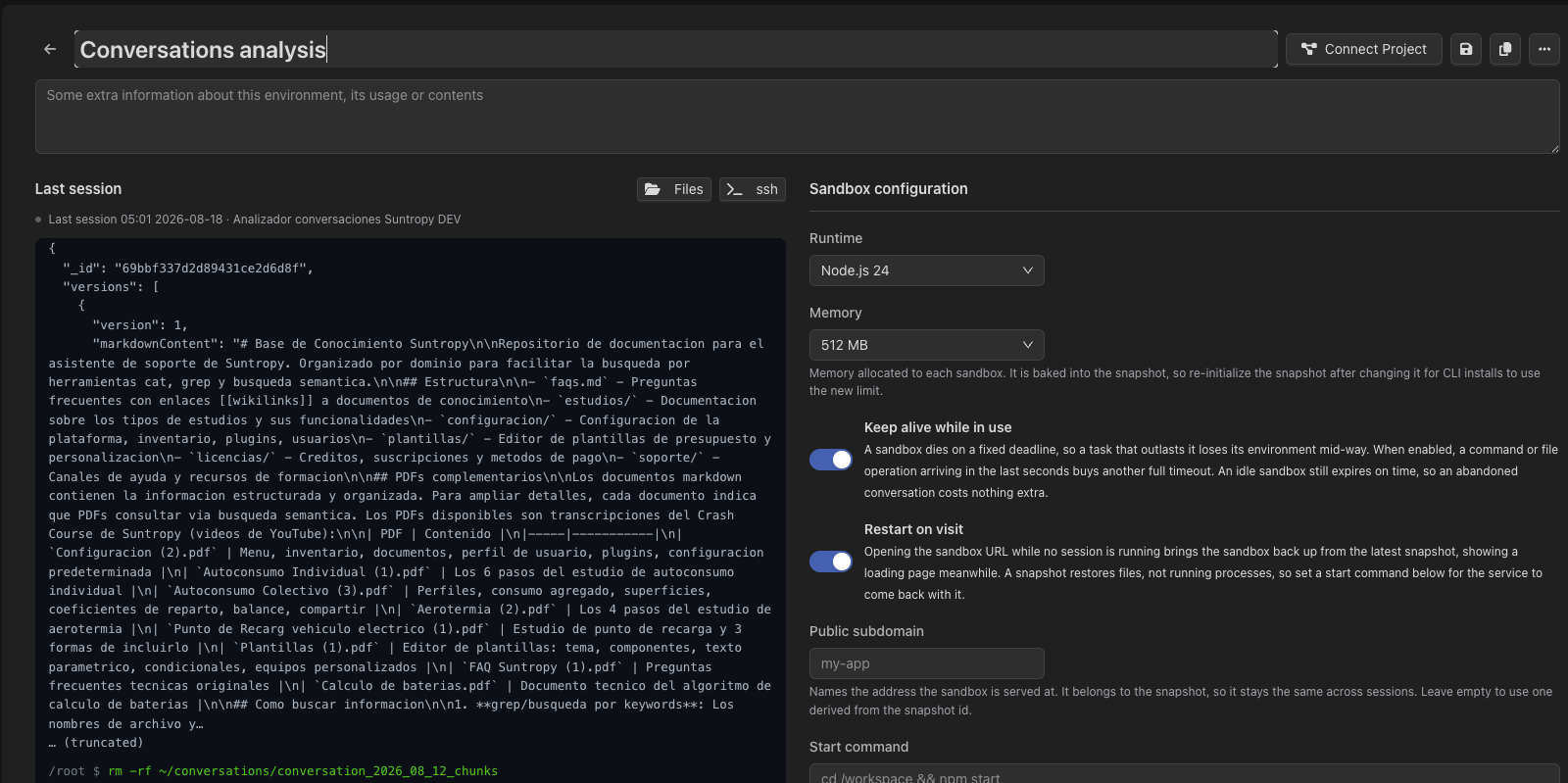
Two options change the lifecycle, both off unless you turn them on:- Persist after the session closes — the machine survives the end of the conversation.
- Auto-extend — an operation arriving just before the deadline buys another full timeout, so a long task does not lose its machine halfway through. Idle sandboxes still expire on schedule.
Publishing what the sandbox serves
A sandbox can expose a service on a public URL — the practical way for an agent to build something and show it to a person. The URL belongs to the environment’s snapshot, not to a single sandbox, so it stays valid between sessions. Two settings shape it:- Public slug — the subdomain, e.g.
my-appformy-app.sandbox.devic.ai. Without one, an opaque but stable label is derived from the snapshot. - Start command — what to run after restoring the snapshot to bring the service back up, e.g.
cd /workspace && npm start.
The start command is not the init script. The init script says how to prepare a machine and runs when one is created; the start command says how to serve the snapshot and runs on every restore — including one triggered by a visitor arriving at the URL. Restoring brings back the filesystem, not a process someone started by hand, which is exactly why the start command exists.
Files and terminal
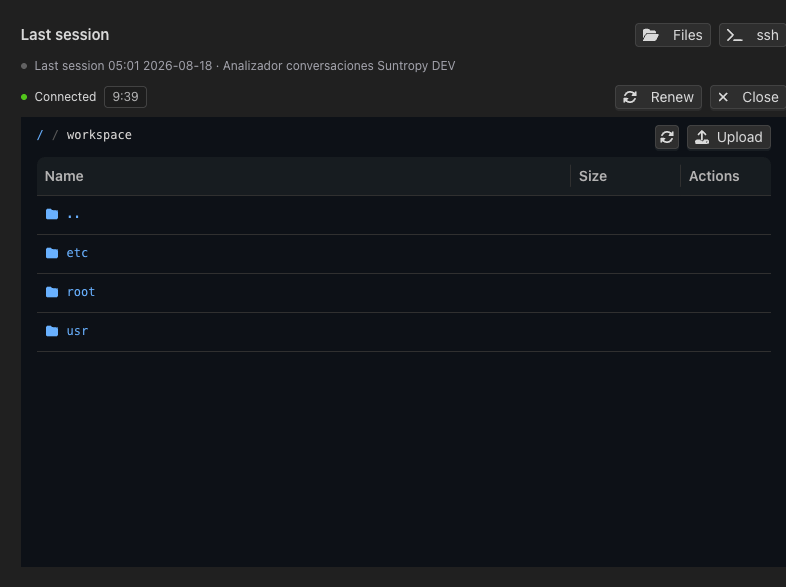
From the environment you get a read-only view of the last session’s commands, a terminal of your own to work on the machine directly, and a file explorer.