

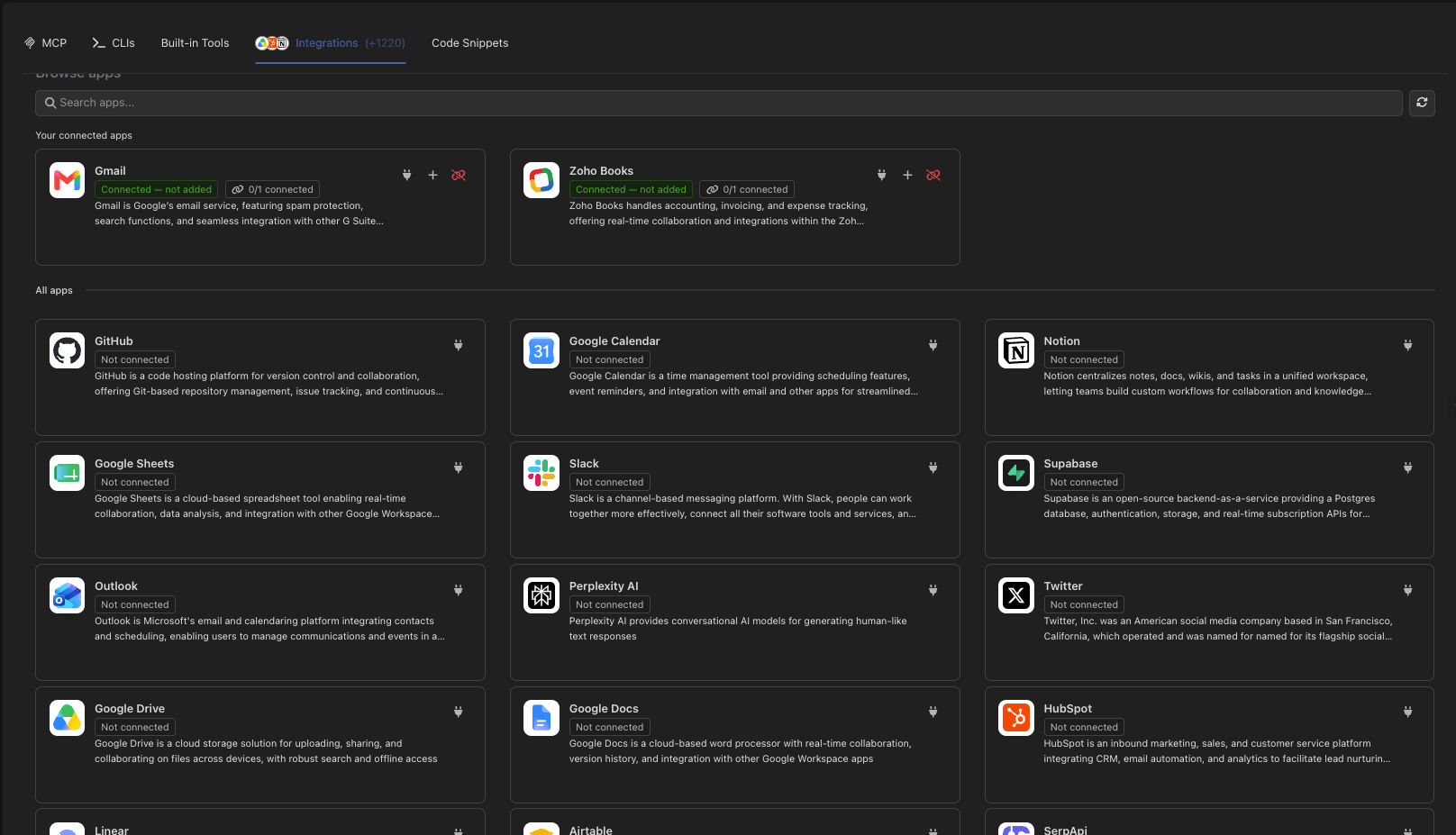
From an app to a working tool
1
Find the app
Browse or search the catalogue. Hundreds of applications, from mail and calendars to CRMs and file storage.
2
Connect an account
Authorise it. Most apps open the provider’s own consent screen; apps that authenticate with an API key are connected without leaving the page.
3
Build the tool server
Devic creates a tool server bound to that connected account, exposing the app’s tools.
4
Choose the tools
Enable the ones the agent should have. An assistant offered sixty tools chooses worse than one offered six.
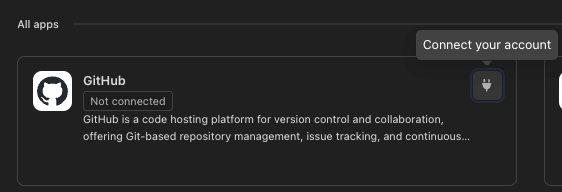
One tool server is one account. The connected account is pinned when the server is created, which is what lets two Google Drive accounts coexist as two servers instead of one that silently switches between them.
Choosing which tools are exposed
A connected app usually offers far more tools than any single agent needs. The tool list of an integration shows what is exposed today and lets you browse the app’s whole catalogue to add more.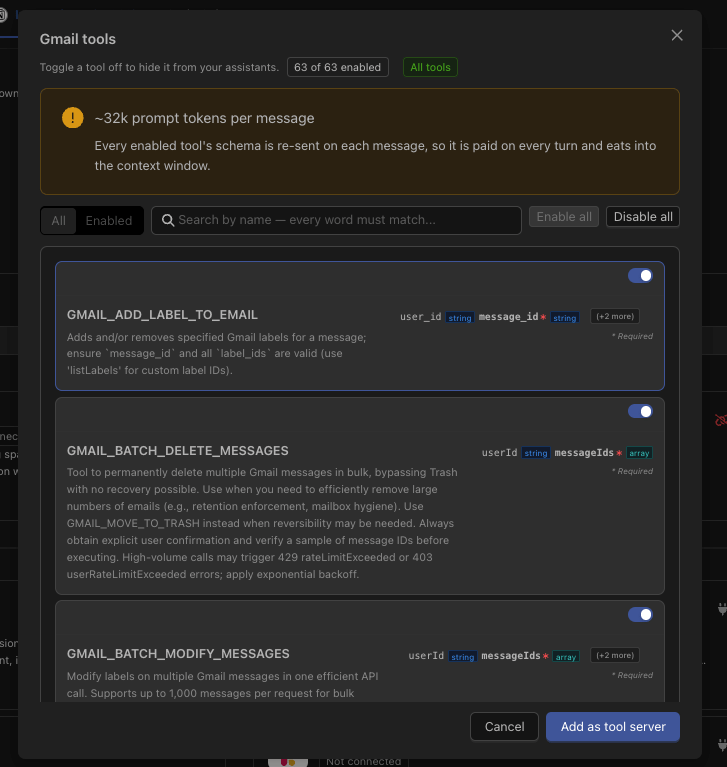
Where connections live
An integration connected here belongs to the workspace: it is your account’s connection, used by the agents you configure. That is a different thing from letting your end users connect their own accounts from inside your product. Both exist, and they are deliberately separate.Triggers
Start an agent when something happens in a connected app.
For your end users
Let each customer connect their own accounts, without ever seeing another’s.