

Overview
After creating or importing an MCP, you will access its main panel, where you can adjust the general server settings and manage the tools that compose it.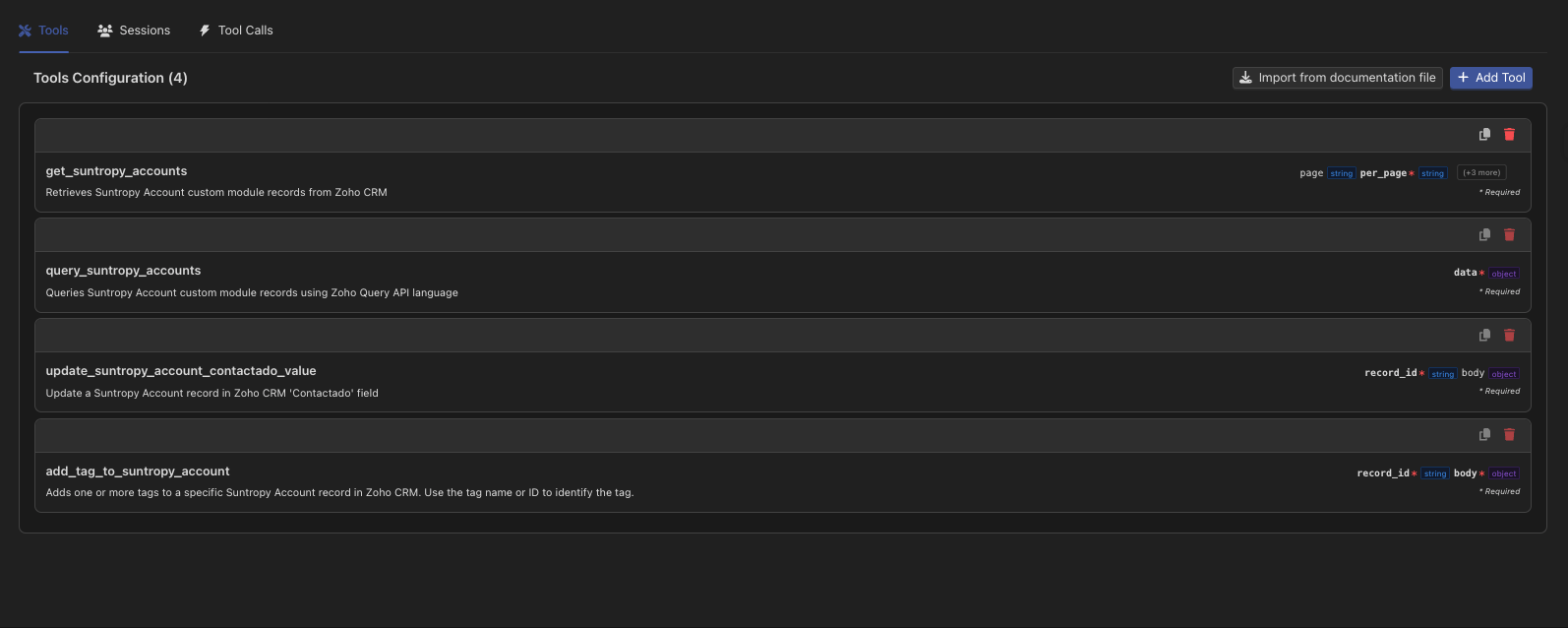
Server Configuration
On the left column, you’ll find the base configuration of the MCP.Each field determines how the server will communicate with your services or APIs:
- Name: identifier of the MCP within the platform.
- Description: summary of the service’s purpose or function.
- Server URL: root endpoint of the API used to invoke the tools.
- Authentication Method: compatible authentication method (Basic, Bearer, or JWT).
- API Key / Token: credential required to authorize requests.
- Template parameters: dynamic variables (e.g.,
{tenantToken}) that can be used inside requests.
Save changes
After updating the MCP parameters, click Save Changes to apply the configuration.
Tools Configuration
The right column displays the tools menu, showing all available or manually created endpoints within the MCP.Each item represents a tool that agents or assistants can invoke. Each tool displays:
- Function name: technical name or endpoint (
get_study_counts_by_type,get_login_register_metrics, etc.). - HTTP Method (GET, POST, PUT, DELETE).
- Body type or required parameters.
- Functional description explaining its purpose or returned data.
Import or add tools
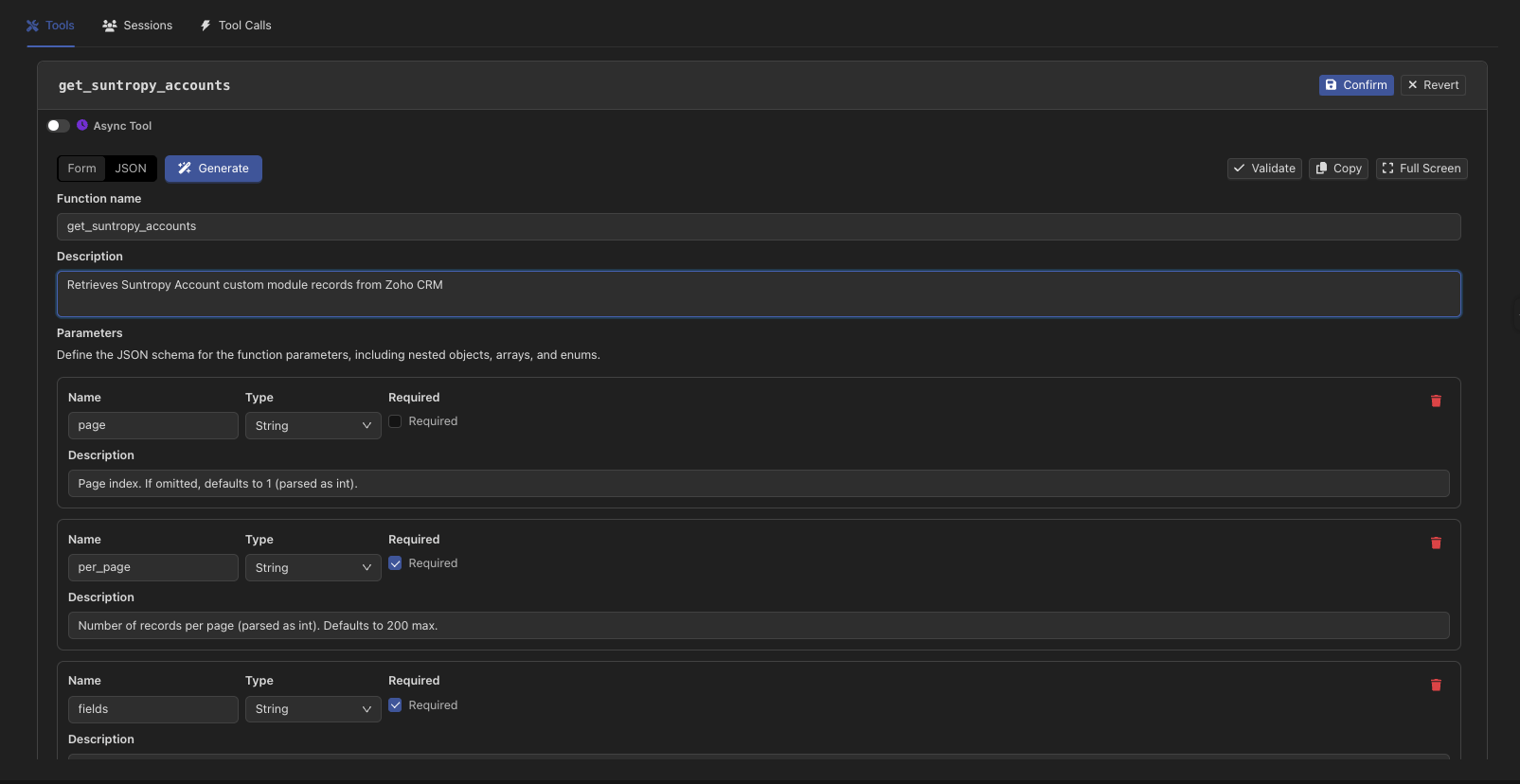
Import tools from your API documentation (Import from documentation) or create new ones manually using Add Tool.
Operational MCP
Once changes are saved, the MCP becomes ready for use.The configured tools will be available to any agents or assistants using the connector. Each active MCP can:
- Execute real requests against the associated API.
- Be invoked through natural language by an agent or assistant.
- Be published as an external endpoint accessible from environments like ChatGPT or SaaS applications.
Next step
Learn how to customize the behavior of each tool and define execution parameters.